2025
PaperFirst-author paper: a PML–mTOR–RONIN brake on triple-negative breast cancer
PML, mTOR and RONIN form a complex that turns down ribosomal genes and pushes triple-negative breast cancer cells into senescence.
Read my note Read the paperI'm Younes Medkour, a molecular biologist in Montréal. As an undergraduate, I studied evolution first and then cancer biology. I studied aging for my PhD, returned to cancer and metabolism as a postdoc, and now work on extracellular vesicles (EVs) as a way to deliver drugs.
I also teach university biology, and I co-founded Nanomère to take some of this work out of the lab.

I develop EV drug carriers (EVX-1 for chemotherapy, and ProbioVesicle, probiotic yeast vesicles for anti-aging actives) and test whether the human immune system tolerates them.
The researchI study how cells stop dividing, from a protein complex that halts triple-negative breast cancer cells to plant extracts that slow aging in yeast.
The findingsI study how human immune cells respond to drug carriers: whether EVX-1 and ProbioVesicle are tolerated, and why immune memory can make a carrier fail the second time.
Immune memory and carriers| 01 | Mechanism first | I want to know why something works before I trust that it works. |
|---|---|---|
| 02 | Test across many models | I test ideas in yeast, mice and many human cell lines. A result that holds in one system is a start, not an answer. |
| 03 | Safety is part of the result | A carrier that works but triggers the immune system has not worked. |
| 04 | Explain it plainly | If I can't explain it to a first-year student, I don't understand it well enough yet. |

I spent a year learning to take research out of the lab through op-eds in the Montreal Gazette, interviews, blog posts, a national film competition and talks for CEGEP students.
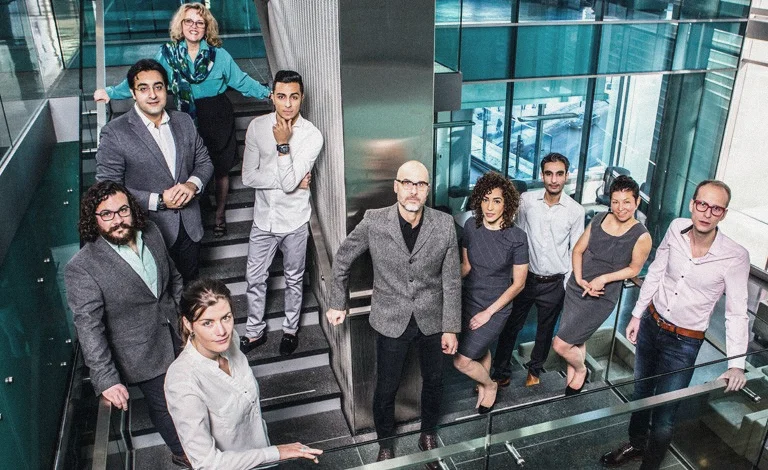


Photos: Concordia University.
PML, mTOR and RONIN form a complex that turns down ribosomal genes and pushes triple-negative breast cancer cells into senescence.
Read my note Read the paperI co-authored a study showing that FBXW7 in liver cells controls nutrient-sensing nuclear receptors, whole-body energy balance and the progression of fatty liver disease in male mice.
Read my note Read the paperThe PE21 extract of white willow bark slows chronological aging in yeast. It was a follow-up to our 2016 screen.
Read my note Read the paperI started with yeast because it ages in days. Everything since has been the same question at a larger scale.

Email is best. I read everything, and I answer when I can add something useful.
Aging, cancer and drug delivery. What the research says, and what it doesn't.