May 2026
Company
Co-founded Nanomère
I co-founded Nanomère to take my research on aging and on delivering bioactives out of the lab. The company makes ProbioVesicle, vesicles from probiotic yeast that carry anti-aging actives into the skin.

This is a record of the work since 2015, newest first.
I co-founded Nanomère to take my research on aging and on delivering bioactives out of the lab. The company makes ProbioVesicle, vesicles from probiotic yeast that carry anti-aging actives into the skin.
PML, mTOR and RONIN form a complex that turns down ribosomal genes and pushes triple-negative breast cancer cells into senescence.
SEVO Bioscience hired me as its liaison with Mila to build an AI algorithm for protein design, and to consult on the computational biology side.
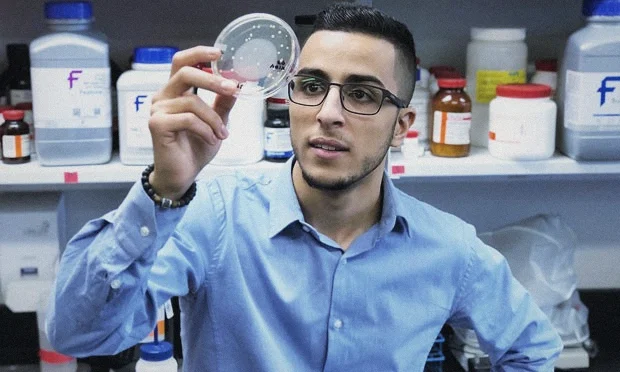
I lead the cell biology and delivery arm in Christopher Brett’s lab at Concordia, where we are building a vesicle carrier for chemotherapy. With partner labs in glycoengineering and human immunology, we test how human immune cells respond to these carriers. Through my company, Nanomère, we make ProbioVesicle, a probiotic yeast vesicle carrying anti-aging actives.
In Christopher Brett’s lab, I lead the cell biology and delivery arm of a vesicle-based drug delivery program.
I measured the fats made by engineered microalgae, to help them produce valuable compounds.
I teach molecular biology, molecular genetics and structural genomics. Full courses are free on YouTube.
I co-authored a study showing that FBXW7 in liver cells controls nutrient-sensing nuclear receptors, whole-body energy balance and the progression of fatty liver disease in male mice.
This was my first attempt at building a company: a software development firm that I ran as Chief Executive Officer alongside my postdoctoral research at McGill.
The FRQS Postdoctoral Fellowship, a McGill Faculty of Medicine Award and a Karassik Foundation Fellowship supported my cancer research at McGill.
I studied breast cancer and metabolism: a PML–mTOR–RONIN nuclear complex that controls ribosome production and senescence, and hotspot mutations in estrogen-related receptor alpha that drive a rare triple-negative lobular carcinoma.
The PE21 extract of white willow bark delays aging in yeast by remodeling lipid metabolism.
My thesis research focused on the mechanisms of aging in yeast and produced six papers.
I co-hosted a GradProSkills workshop at Concordia on how researchers can write for the public.
Concordia’s ten Public Scholars closed the 2018–19 year with a multimedia showcase of their work.
I co-organized and presented at an evening for CEGEP students on paths into science careers.
I wrote two opinion pieces for the Montreal Gazette and was interviewed by TVA Nouvelles, Le Journal de Montréal and NSERC about aging research.
I wrote an essay for the Concordia Public Scholars blog on memory, information overload and how the brain adapts.
I presented the discovery of a plant extract that extends lifespan and delays age-related decline in baker’s yeast to researchers from leading universities who work on yeast genetics.
As a Concordia Public Scholar, I wrote an essay for students on why cramming fails and why sleep is the most important thing for memory.
My one-minute film “The Fountain of Youth”, on how white willow bark extract extends lifespan in yeast, was longlisted in February and named a runner-up in May, with a $2,500 prize.
I was selected for Concordia’s Public Scholars program, which trains PhD researchers to share their work with the public.
I co-authored a study showing how changes in mitochondrial lipids boost the anti-aging effect of lithocholic acid in yeast.
Concordia featured the Titorenko lab’s work linking yeast aging to cancer, including molecules that delay aging and selectively kill cancer cells in the lab.
Our plant-extract screen received international coverage, which highlighted willow bark as the most potent extract we found.
I co-authored a study, with Idunn Technologies, that identified plant extracts able to delay chronological aging in yeast. Willow bark was the most effective, outperforming rapamycin and metformin in the screen.
I wrote this review with Vladimir Titorenko on how mitochondria send signals that shape how yeast cells age.
As an undergraduate, I did research in evolution and then cancer biology, before starting graduate work on aging in Vladimir Titorenko’s lab.
Aging, cancer and drug delivery. What the research says, and what it doesn't.