Co-organized “STEM after CEGEP” at Dawson College
With two fellow Public Scholars, I co-organized an evening at Dawson College on paths into science.
 Dr. Younes Medkour
February 2019
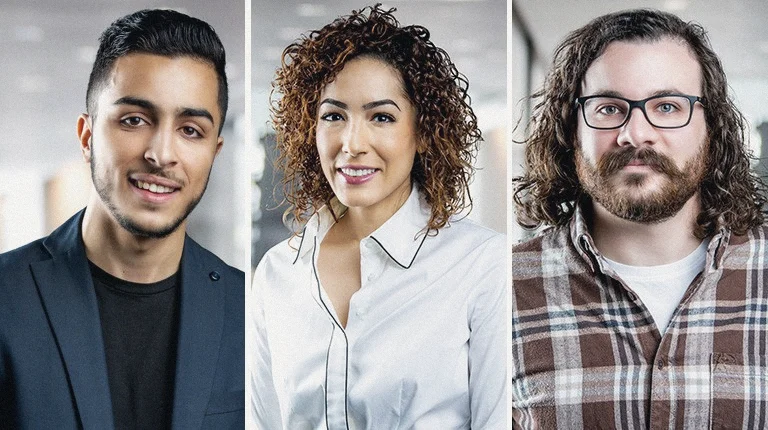
On February 18, 2019, I co-organized “STEM after CEGEP: Paths and Possibilities” at Dawson College with Nura Jabagi and Milan Valyear, and presented alongside other PhD candidates.
The idea was simple. Bring together graduate students from different fields, put them in front of CEGEP students, and let them talk honestly about how they got where they are and what their work actually looks like day to day.
Why CEGEP
CEGEP is where many students in Quebec decide whether science is for them. Most have never met a working researcher. They see grades, not careers.
Quebec’s system makes this moment especially important. CEGEP sits between high school and university, and the program a student chooses there largely determines what they can study next. Students are making a decision with long-term consequences at an age when they have very little information about what scientific careers involve. If nobody shows them, many will assume research is reserved for a small group of people who were always destined for it.
What we tried to show
Outreach is how you make research visible to students who would never otherwise see it.
That science is not one path. The speakers came from engineering, mathematics, psychology, business and biology. Some of us took detours. All of us found our way by following questions, not job titles.
We also wanted to make the work feel concrete. A PhD is an abstract idea to most seventeen-year-olds. Hearing someone describe the experiment that failed last week, or the question that kept them up at night, makes it real. It shows that research is done by ordinary people who are curious and persistent, not by people who already know all the answers.
Detours were an important part of the message. Many students worry that a single wrong choice will close doors forever. Hearing from people who changed fields, took time off or discovered their interest late is reassuring, and it is also accurate. Careers in science are rarely straight lines.
My perspective
I would not be a scientist if someone had not shown me, early, that research was a real option. Outreach is how you make that option visible to students who would never otherwise see it. An evening like this costs a few hours and can change where someone ends up. That trade is hard to beat.
I think researchers underestimate how much influence they have here. We spend years training for our work and often forget how invisible it is from the outside. Students who do not have a scientist in their family or their community have no natural way to learn what the job involves. A conversation with someone only a few years ahead of them can fill that gap in a way no brochure can.
Outreach is often treated as optional, something done after the real work. I disagree. If science depends on recruiting curious people from every background, then showing students that the door is open is part of the job.