Awarded the Grand Prix Jeune Potentiel
The Club Avenir Foundation recognized my work at its 16th gala in Montréal.
 Dr. Younes Medkour
November 2018
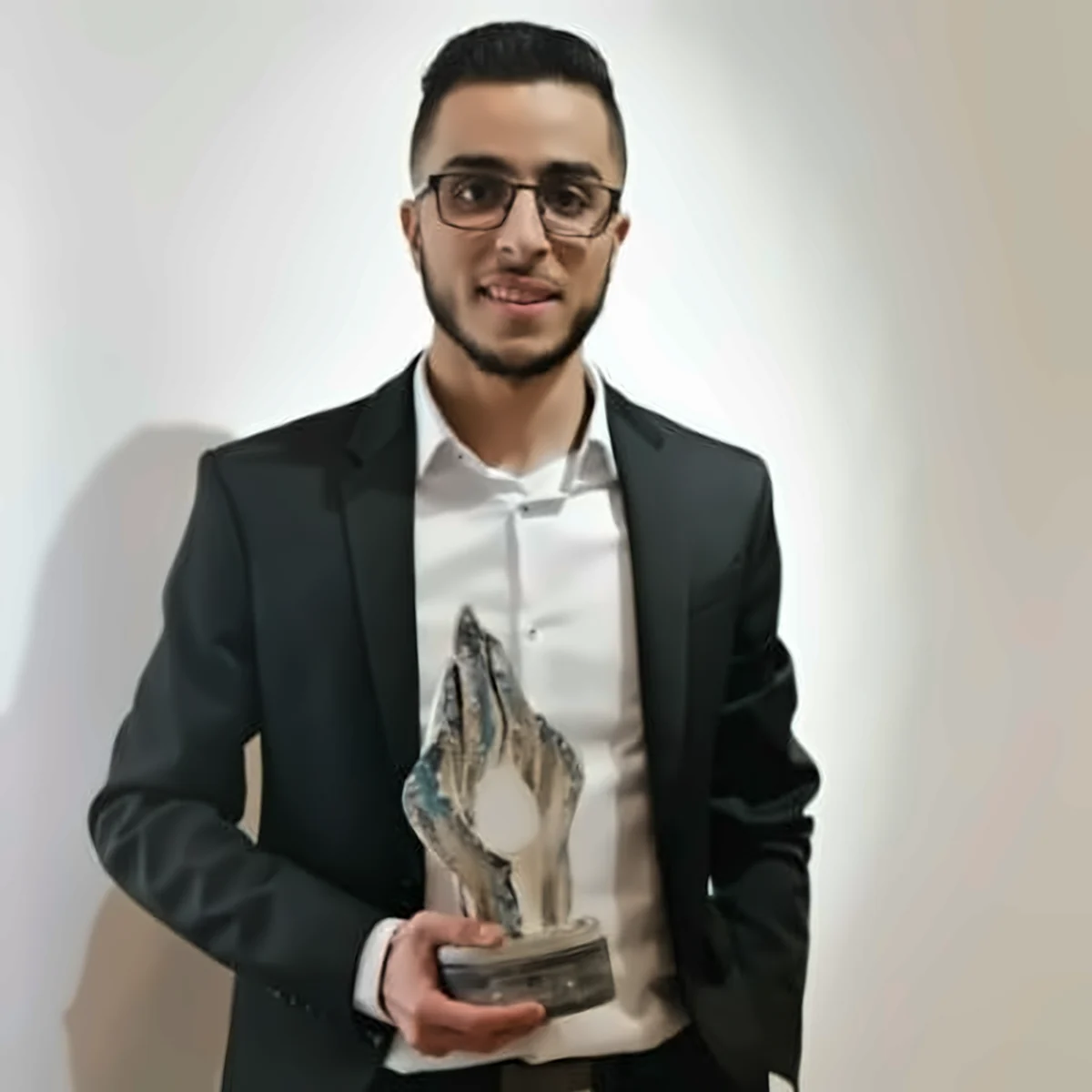
On November 3, 2018, I received the Grand Prix Jeune Potentiel from the Club Avenir Foundation, at its 16th gala at Le Gesù in Montréal.
The award recognizes young members of the Algerian community in Canada whose work stands out for its excellence and represents the community well. It is not a scientific prize in the usual sense. It is given by a community to people it sees as examples, and that changes what it means to receive it.
What the award is for
Most recognition in science comes from inside science: a grant, a fellowship, a paper accepted after review. Those matter, but they speak mostly to other researchers. An award like this one asks a different question. It is less about whether the work is technically strong and more about whether it can show others what is possible.
For many families who settle in a new country, the path into research is not obvious. There is no relative who did a PhD, no one to explain how labs work, how to find a supervisor, or why years of training can be worth it. Visible examples help fill that gap.
A year of mentoring
The prize came with a year of mentoring from Ghani Kolli, CEO of HumanYo+Impact, focused on turning ideas into projects with real social impact. It was my first serious push toward thinking about science beyond papers: who it reaches, and what it can become.
Recognition from your own community is a reminder that the work is also an example.
That shift was important. Academic training teaches you to ask whether a result is true. It does not always teach you to ask who will use it, how it will reach them, or what it takes to turn an idea into something that lasts. Having someone from outside academia ask those questions forced me to think about my work in more practical terms.
Why it mattered
Recognition from your own community is different. It is a reminder that the work is also an example, for students who don’t yet see themselves in a lab.
Science still struggles to reach people from many backgrounds. Talent is spread widely; access to research careers is not. Young people tend to pursue paths they can picture themselves in, and they picture those paths through people they recognize.
My perspective
I don’t think awards make anyone a better scientist. What they can do is create a moment where you are asked to look at your work from the outside. This one made me take the public side of science more seriously: speaking, mentoring, and explaining research in plain language.
It also reminded me that representation is not a slogan. It is practical. A student who sees someone with a similar story working in a lab has one less reason to assume that world is closed to them. If my path can make that step easier for even a few people, that matters as much as any single result I publish.