CRISPR is Science’s Breakthrough of the Year. What it means for the lab bench
Gene editing just became cheap, fast and precise. For cell biologists, that changes the questions we can ask.
 Dr. Younes Medkour
December 2015 · 4 min read
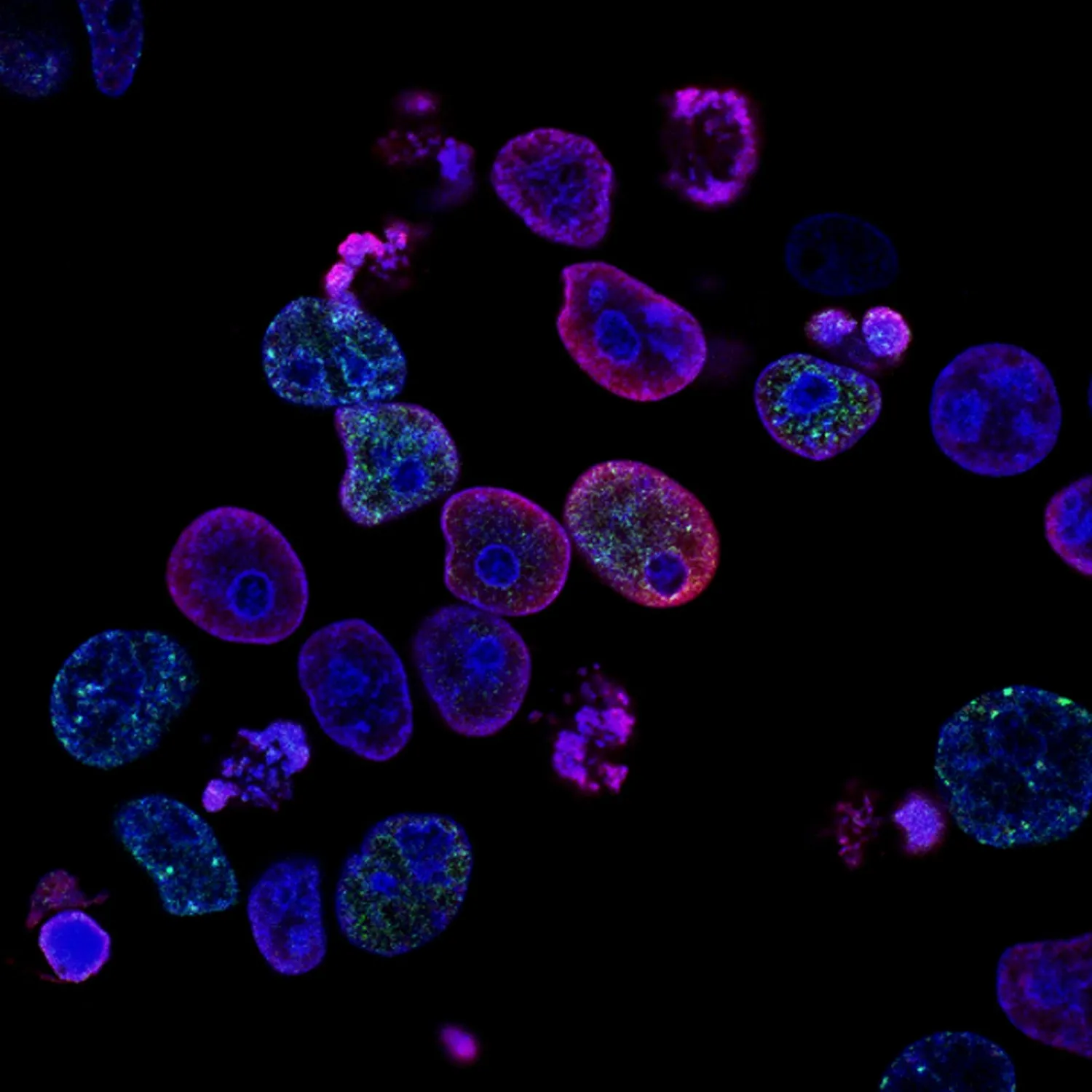
This month, CRISPR was named the scientific Breakthrough of the Year. The tool, adapted from a bacterial immune system, lets researchers cut and edit DNA at a chosen location with remarkable ease.
The basic idea is elegant. Bacteria use CRISPR to remember viruses that have infected them and to cut their DNA if they return. Researchers turned that system into a programmable tool. A short guide RNA tells an enzyme, Cas9, where to go in the genome, and the enzyme cuts there. The cell then repairs the cut, and in doing so a gene can be disrupted or changed.
Why biologists are excited
Until now, removing a gene from a cell to see what it does could take months or years. With CRISPR, it can take weeks. That means we can test ideas that used to be too expensive to try.
Older gene-editing methods existed, but they required designing a new custom protein for every target. That was slow, costly and often unreliable. With CRISPR, changing the target is mostly a matter of changing a short piece of RNA. That makes it practical for an ordinary lab, not only for specialized groups with large budgets.
It also makes large-scale experiments possible. Instead of studying one gene at a time, researchers can design screens that knock out many genes in parallel and see which ones matter for a given behaviour, like growth, survival or response to a drug.
What it does not solve
Editing a cell in a dish is not editing a person.
CRISPR is not perfect. The enzyme can sometimes cut in places it was not meant to, and the repair process the cell uses is not always predictable. Delivering the system into the right cells in a living organism is also much harder than doing it in a dish. These are active problems, and they matter most for any use in patients.
My perspective
As a student moving from evolution to cancer biology, I see CRISPR as a way to ask “why” directly. Which genes let a cancer cell escape growth control? Which ones decide how long a cell lives? We can now switch them off one by one and watch.
That changes the kind of science a student can do. Questions that would once have been a full PhD project on a single gene can now be part of a broader experiment. For fields like cancer and aging, where many genes interact, that is a big step. It moves us from correlation, noticing that a gene is high or low in a disease, toward causation, showing what happens when it is removed.
I also think it will change how we teach biology. Students will grow up with the ability to edit genes as a routine tool, the way earlier generations grew up with PCR.
The caution is the same as with every powerful tool: editing a cell in a dish is not editing a person. Changes to embryos or germ cells would be passed to future generations, and that is a different ethical question from treating a disease in one patient. Scientists, regulators and the public need to discuss those lines now, while the technology is still young.
The science will move faster than the ethics if we let it.