Lipidomics in industry: a year at GC Lipid Technologies
As Scientist II at GC Lipid Technologies, I used lipidomics to help engineer microalgae for valuable compounds.
 Dr. Younes Medkour
2024
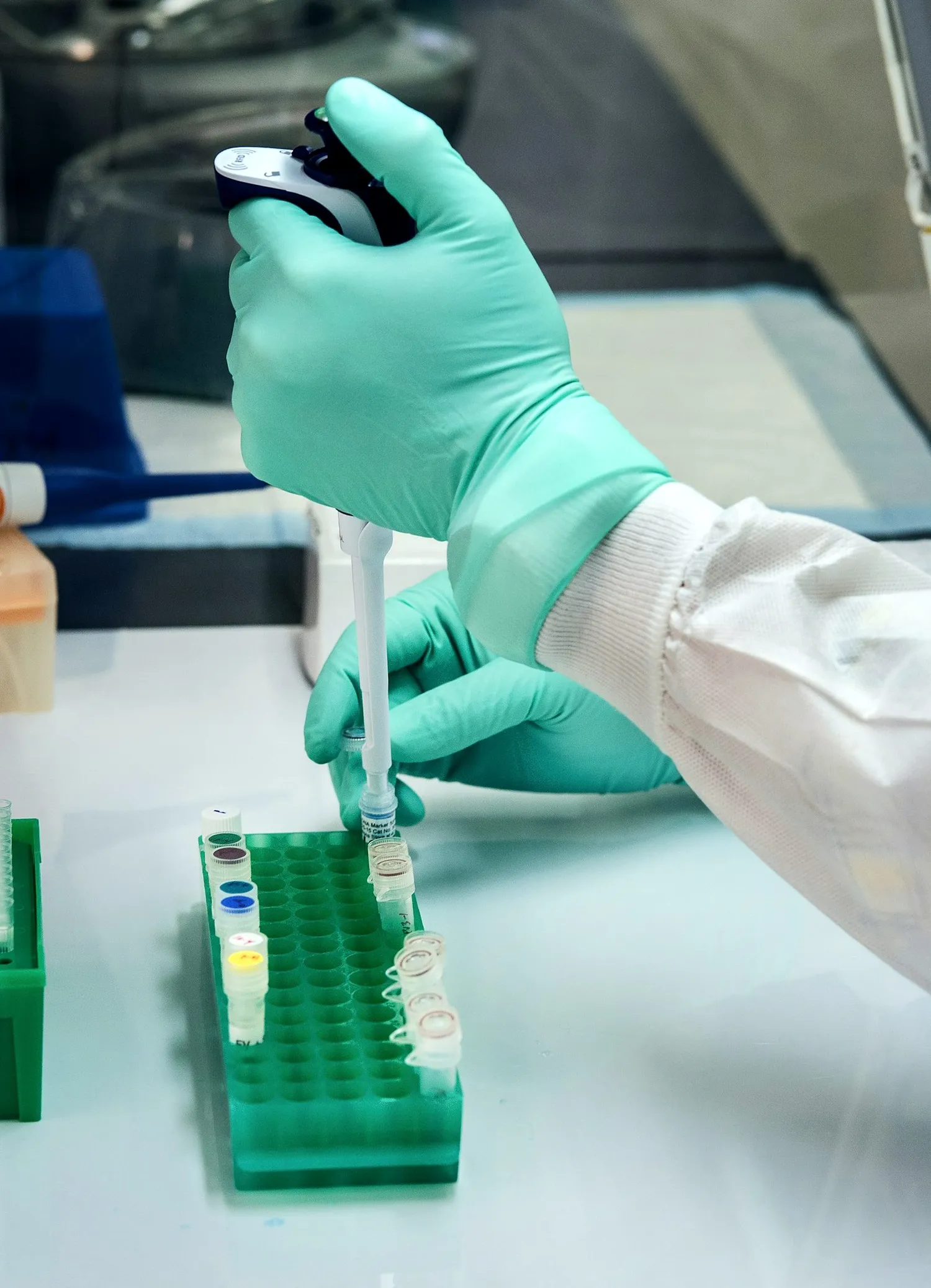
From 2024 to 2025, I worked as Scientist II at GC Lipid Technologies in Montréal, analyzing the lipids of genetically engineered strains of the microalga Chlorella vulgaris to support production of high-value metabolites.
Microalgae are attractive production platforms. They grow quickly, need relatively simple inputs, and can be engineered to make compounds that are expensive or difficult to obtain from other sources. Lipids are a large part of that value. But engineering a strain is only useful if you can measure precisely what it produces, and that was my role.
Same tools, new goal
The mass spectrometry and lipidomics I learned during my PhD were the core of the job. What changed was the goal. In academia, you analyze to understand. In industry, you analyze to decide which strain moves forward.
Lipidomics means measuring hundreds of different lipid species at once and comparing their profiles across samples. In a research lab, an unexpected change in that profile is an invitation to dig deeper. In a production setting, it is a data point in a decision. The technical skills are identical. The question you are answering is different, and that changes how you design experiments, how you report them and how much uncertainty you can tolerate.
What surprised me
In academia, you analyze to understand. In industry, you analyze to decide.
How fast decisions are made, and how much depends on data being clean, consistent and ready on time. A beautiful result that arrives a month late has no value to a production schedule.
In academia, it is common to refine an analysis until it is as complete as possible. In industry, a good answer delivered on time is usually worth more than a perfect one delivered late. That does not mean lower standards. It means building methods that are robust and reproducible from the start, so that every run can be trusted without being redone.
I also learned how much of the work happens between people. A result has to be communicated clearly to colleagues who are not specialists, and it has to fit into a process that other teams depend on. Clarity becomes as important as accuracy.
My perspective
Every scientist should spend time in industry. It sharpens your sense of what a result is for. It also made me a better collaborator for the companies I have worked with since.
Academic training teaches you to ask good questions. Industry teaches you to recognize which questions are worth answering now, and what form the answer needs to take to be useful. Those are complementary skills, and I think the gap between the two worlds is narrower than many people assume.
I came back to research with a more practical eye. When I plan an experiment today, I think earlier about who will use the result and what decision it will inform. That habit came directly from this year, and I consider it one of the most valuable things I have learned.