“The Fountain of Youth” named runner-up in NSERC Science, Action!
My short film “The Fountain of Youth” started as a challenge and ended as runner-up in a national competition.
 Dr. Younes Medkour
February – May 2018
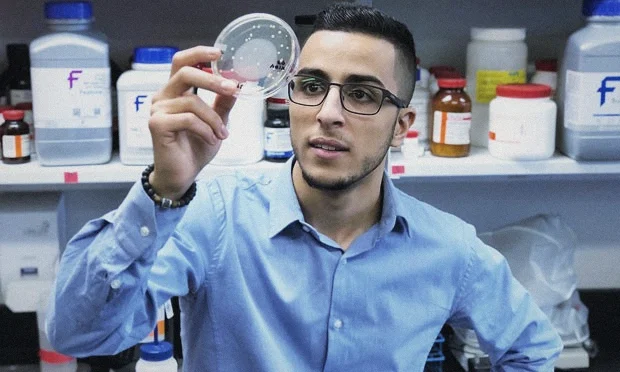
In 2018 I was one of Concordia’s Public Scholars, a program for PhD researchers who want to take their work outside the lab. One of the things I made that year was a one-minute film for NSERC’s Science, Action! competition.
The film was called “The Fountain of Youth.” In one minute, it had to explain what I had spent years on: that an extract of white willow bark extends the lifespan of baker’s yeast, and why that matters for understanding human aging.
That second part is the hard one. Most people are happy to hear that something makes yeast live longer, but the obvious follow-up is: why should I care about yeast? The honest answer is that yeast cells and human cells share a surprising amount of their basic machinery. The pathways that sense nutrients, manage energy and respond to stress were conserved over a very long evolutionary history. That is why yeast has been one of the most useful models in aging research for decades. It is cheap, fast and genetically easy to work with, and what we learn there often points to processes worth studying in human cells.
From longlist to runner-up
In February it was longlisted, and the next round depended on how many people watched and shared it. In May, it was named a runner-up, with a $2,500 prize.
That middle stage was new to me. In science, work is judged by peers who read the details. Here, the first filter was whether ordinary people found it worth a minute of their time and worth passing on to someone else. It forced me to ask a question researchers rarely ask: would anyone outside my field choose to watch this?
I never thought I could reach this many people with one video.
The prize was nice. What surprised me more was the reach. I never thought I could reach that many people with one video. People started asking me about the research, which made me happy, because I enjoy talking about what I do.
Those conversations were the real reward. People asked whether they should be eating willow bark, whether aging can really be slowed, and what yeast has to do with them. Those are good questions, and they are exactly the ones scientists should be ready to answer clearly. They also reminded me how much curiosity there is about aging, and how little of the actual research reaches the people who are curious.
What a minute teaches you
Cutting years of work down to sixty seconds forces you to decide what actually matters. You cannot hedge every sentence or mention every control. You have to choose the one idea you want people to leave with and build everything around it.
That does not mean dumbing it down. The core claim in the film was accurate: a plant extract extended lifespan in a model organism, and that organism shares important biology with us. What I left out were the details that matter to specialists but not to someone hearing about the work for the first time.
That habit is a big part of how I teach and write today. When I prepare a lecture or an article, I still start by asking what the one-minute version would be. If I cannot say it in a minute, I usually do not understand it well enough yet, and the longer version will not be clear either.