Joined McGill’s Goodman Cancer Institute as a postdoctoral fellow
In 2020, I joined the Goodman Cancer Institute at McGill as a postdoctoral fellow, supported by $200K in competitive fellowships.
 Dr. Younes Medkour
2020
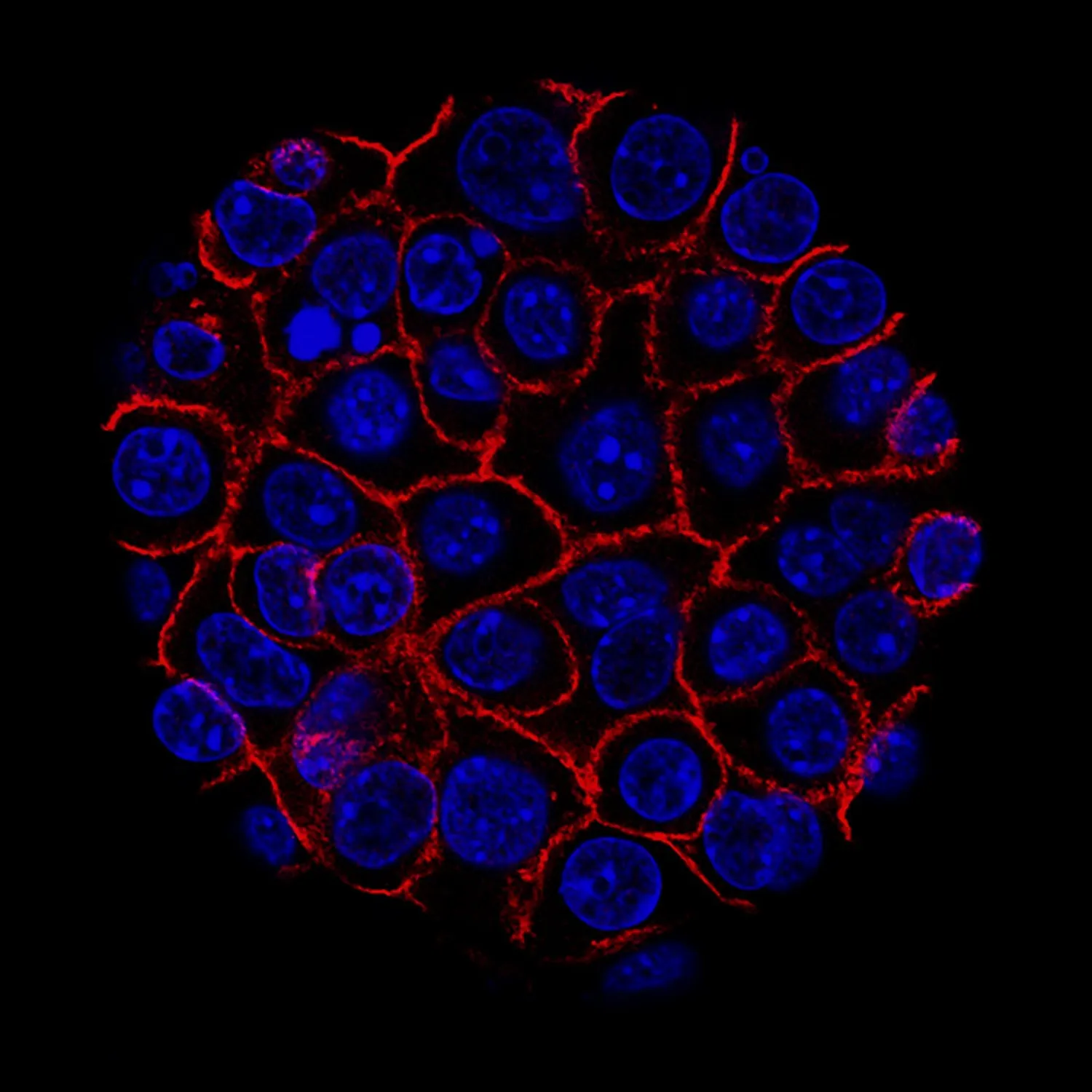
In 2020, I moved from yeast to human cancer, joining McGill’s Goodman Cancer Institute as a postdoctoral fellow. Over the next five years, the work was supported by the FRQS Postdoctoral Fellowship, a McGill Faculty of Medicine award and a Karassik Foundation fellowship, about $200K in total.
What I worked on
Two main questions. First, how a PML–mTOR–RONIN complex in the nucleus controls ribosome production and pushes triple-negative breast cancer cells into senescence. Second, how hotspot mutations in a nuclear receptor called ERRα drive a rare, triple-negative form of lobular breast cancer. Answering them meant combining genomics, CRISPR models and proteomics.
Why ribosomes and senescence
Ribosomes are the machines that make proteins, and a cancer cell needs a lot of them to keep growing. mTOR is one of the cell’s main growth regulators, and it is a pathway I already knew well from aging research, where dialing it down extends lifespan in many organisms. Senescence is a state in which a cell stops dividing permanently. In cancer, pushing tumour cells into senescence is one way to stop them from growing. Understanding what links growth signals, ribosome production and senescence is a way of understanding how a cell decides whether to keep dividing.
Why ERRα
Fellowships give early-career researchers the freedom to pursue the risky question.
Nuclear receptors are proteins that switch sets of genes on and off in response to signals. ERRα is involved in controlling metabolism. Hotspot mutations are changes that appear repeatedly at the same position in a gene across different patients, which is often a sign that they give cancer cells an advantage. Studying them in a rare, triple-negative subtype mattered because triple-negative cancers lack the targets that many breast cancer drugs rely on.
The jump
Moving from yeast to human cancer cells is a big change in speed and complexity. Experiments take longer, systems are harder to manipulate, and results are noisier. Tools like CRISPR made it possible to ask precise genetic questions in human cells, but they also demanded more care in design and interpretation. But the questions were familiar: what controls whether a cell grows, and what happens when that control breaks.
I think coming from yeast was an advantage. It trained me to think in terms of pathways that are shared across species, and to look for the core mechanism rather than getting lost in detail.
My perspective
Fellowships matter more than people realize. They give early-career researchers the freedom to pursue the risky question instead of the safe one. A postdoc paid entirely from a project grant is tied to that project’s goals. A fellowship lets you build your own direction, and that is where many original ideas come from. Funding agencies that support people, not only projects, are investing in the next generation of independent scientists.
I also supervised four undergraduate researchers during those years, and I try to give them the same freedom. That means letting them own a question, make mistakes and learn to troubleshoot, rather than just running assays for someone else.