Why yeast is the best aging model you’ve never heard of
The same organism that makes bread and beer has quietly shaped what we know about how cells work, and how they age.
 Dr. Younes Medkour
January 2017 · 6 min read
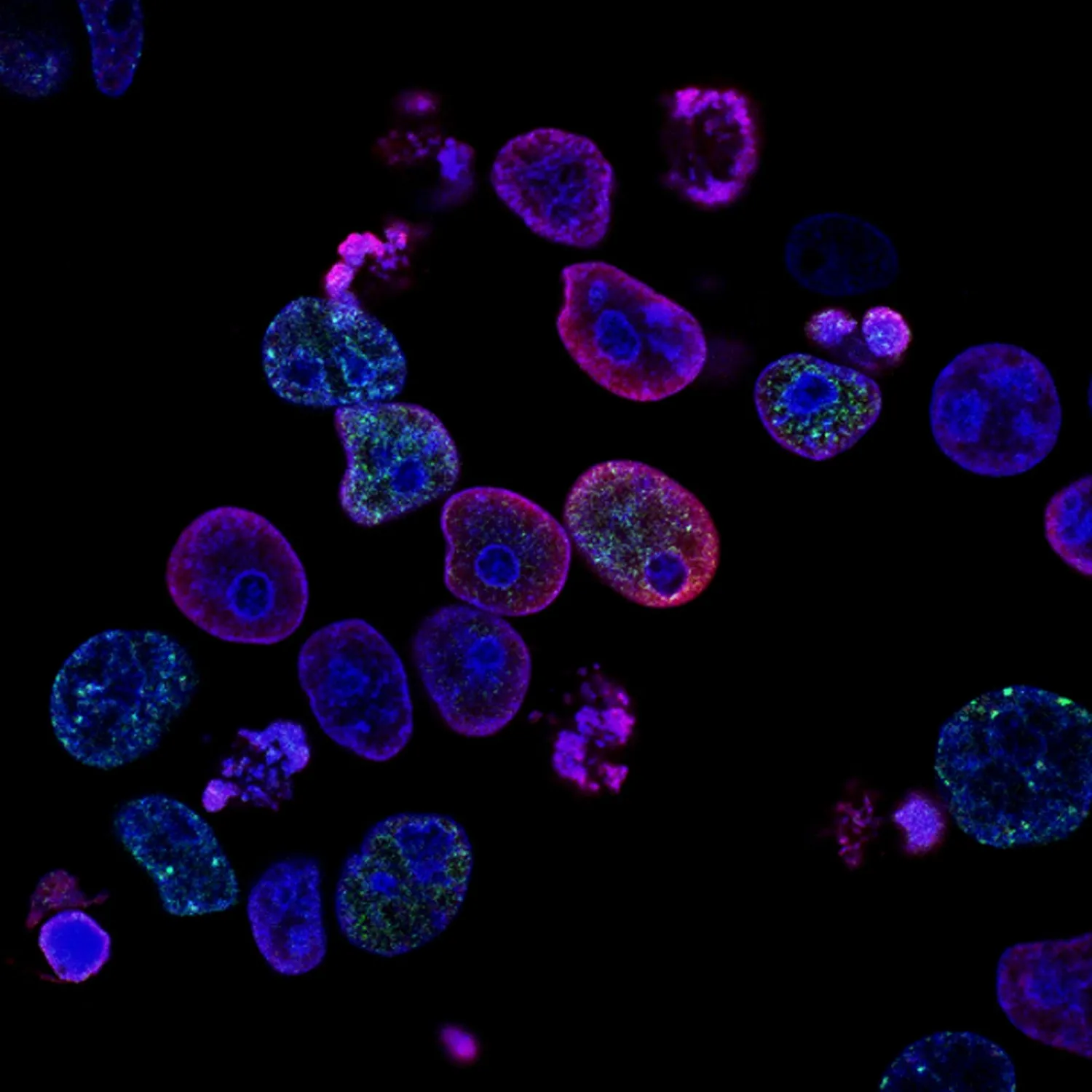
When people hear that I studied aging in yeast, the reaction is usually a polite smile. What can bread yeast tell us about human aging? More than you would think.
Baker’s yeast is a single-celled fungus, but its cells are built on the same basic plan as ours. It has a nucleus, mitochondria and many of the same internal systems. A large share of its genes have recognizable counterparts in humans, and many of the pathways that control growth, stress responses and energy use are shared. That is the foundation of everything that follows.
A track record of Nobel Prizes
Yeast research has been behind several Nobel Prizes. Work in yeast helped uncover how the cell cycle is controlled, which earned Leland Hartwell and Paul Nurse a share of the 2001 prize. Yoshinori Ohsumi won in 2016 for revealing autophagy, the cell’s recycling system, largely through yeast genetics.
These were not discoveries about yeast. They were discoveries about cells, made in yeast because yeast made them possible. The cell cycle machinery found there turned out to be central to cancer. Autophagy turned out to matter for neurodegeneration, infection and aging.
Two ways a yeast cell ages
Biologists measure yeast aging in two ways. Replicative aging counts how many times a mother cell can divide. Chronological aging measures how long a non-dividing cell survives. The second is a useful model for cells in our body that rarely divide, like neurons and muscle.
Yeast will not tell you everything about human aging. But it is often where the right questions start.
Having two models is useful because human aging is not one process. Some of our tissues renew constantly, and some are built to last a lifetime. Yeast lets you study both kinds of decline in the same organism, with the same genetic tools.
Speed is a superpower
A lifespan experiment in yeast takes about two weeks. In mice, closer to three years. That means you can test hundreds of ideas, keep the few that work, and only then move to slower, more expensive models.
Yeast is also easy to manipulate genetically. You can delete a gene, add one or change one with precision, and collections exist in which each gene has been deleted one at a time. That makes it possible to screen the entire genome for factors that shorten or extend lifespan, something that would be impractical in animals.
The limits
Yeast has no organs, no immune system, no brain and no blood vessels. It cannot model inflammation, hormones or how tissues talk to each other, all of which matter in human aging. Results in yeast are a starting point. They need to be tested in more complex systems before they mean anything for people.
My perspective
I think yeast is underrated because it sounds humble. But the best model is not the one that looks most like us. It is the one that lets you ask a clear question and get a clear answer quickly. Some of the most important pathways linked to aging, including nutrient sensing through TOR, were explored early in yeast. Yeast will not tell you everything about human aging. But it is often where the right questions start.