What mRNA vaccines taught us about delivery
The breakthrough everyone remembers was the molecule. The part that made it work was the package.
 Dr. Younes Medkour
November 2023 · 6 min read
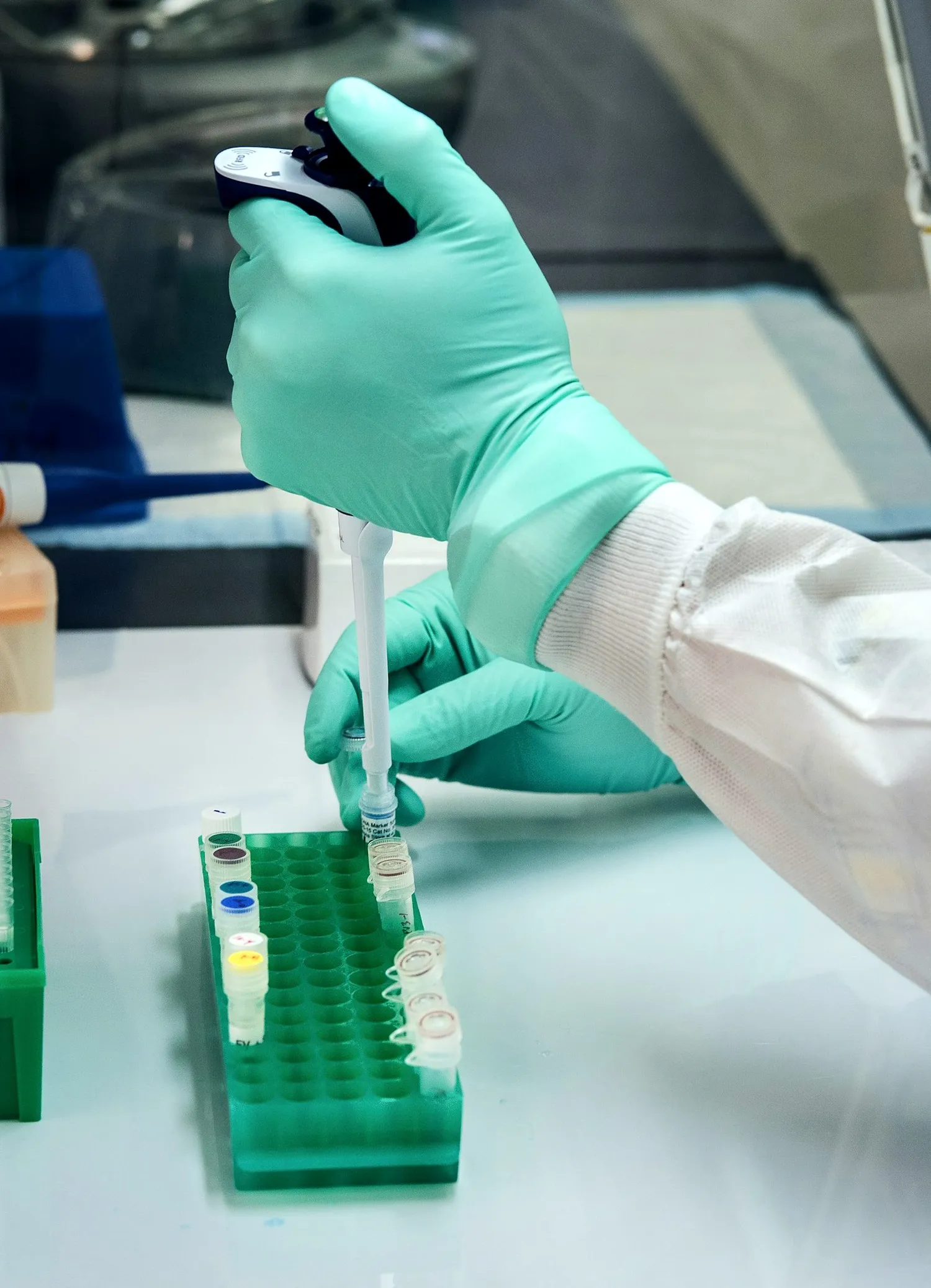
The mRNA vaccines of 2020 felt like they came out of nowhere. They didn’t. Researchers had worked on mRNA for decades. One of the hardest problems was simply getting it into cells.
The concept was elegant from the start. Instead of giving the body a protein, you give it the instructions to make that protein itself. But for years, mRNA was considered too unstable and too inflammatory to be a practical medicine. The breakthrough came from solving those problems one at a time.
The molecule
Katalin Karikó and Drew Weissman found that modifying the building blocks of mRNA stopped it from triggering harmful inflammation. That work earned them the 2023 Nobel Prize in Physiology or Medicine.
The problem they solved was that our cells are built to detect foreign RNA, because that is often a sign of viral infection. Unmodified mRNA set off those alarms. By making small chemical changes to its building blocks, they made the mRNA look less foreign, so the cell would read it instead of attacking it.
The package
But naked mRNA is fragile and gets destroyed quickly. It needed protection: lipid nanoparticles, tiny fat bubbles that carry the mRNA into cells. Without that delivery system, there would have been no vaccine.
Medicine often advances with a better way to get an existing molecule where it needs to go.
Lipid nanoparticles do several jobs at once. They shield the mRNA from enzymes that would break it down, help it cross the cell membrane, and release it inside the cell where it can be translated. Developing particles that did all of this reliably, and could be manufactured at scale, took years of work that rarely made headlines.
The lesson for drug delivery
Two things had to be true at once: the cargo had to work, and the carrier had to be tolerated by the immune system. That is exactly the pair of questions I ask about extracellular vesicles.
Extracellular vesicles are small particles that cells release naturally to exchange molecules with one another. Because the body already makes and handles them, they are an appealing alternative to synthetic carriers. In my work, I study vesicles as carriers for two very different kinds of cargo: chemotherapy, with EVX-1, and anti-aging actives carried by probiotic yeast vesicles, with ProbioVesicle. The logic is the same in both cases. A good molecule is only useful if you can get it to the right place without causing harm along the way.
My perspective
Delivery is still underappreciated. Public attention goes to the molecule, because that is the part with a clear story. But many promising drugs fail not because they do not work, but because they cannot reach their target at a useful dose, or because they cause too much damage on the way there. The mRNA story is a reminder that solving delivery can turn an idea that has been stuck for decades into a medicine.
Medicine often advances not with a new molecule, but with a better way to get an existing one where it needs to go.