AlphaFold and the protein folding problem: a new tool for biology
At the CASP14 assessment, an AI system predicted protein structures with accuracy close to experiment.
 Dr. Younes Medkour
December 2020 · 4 min read
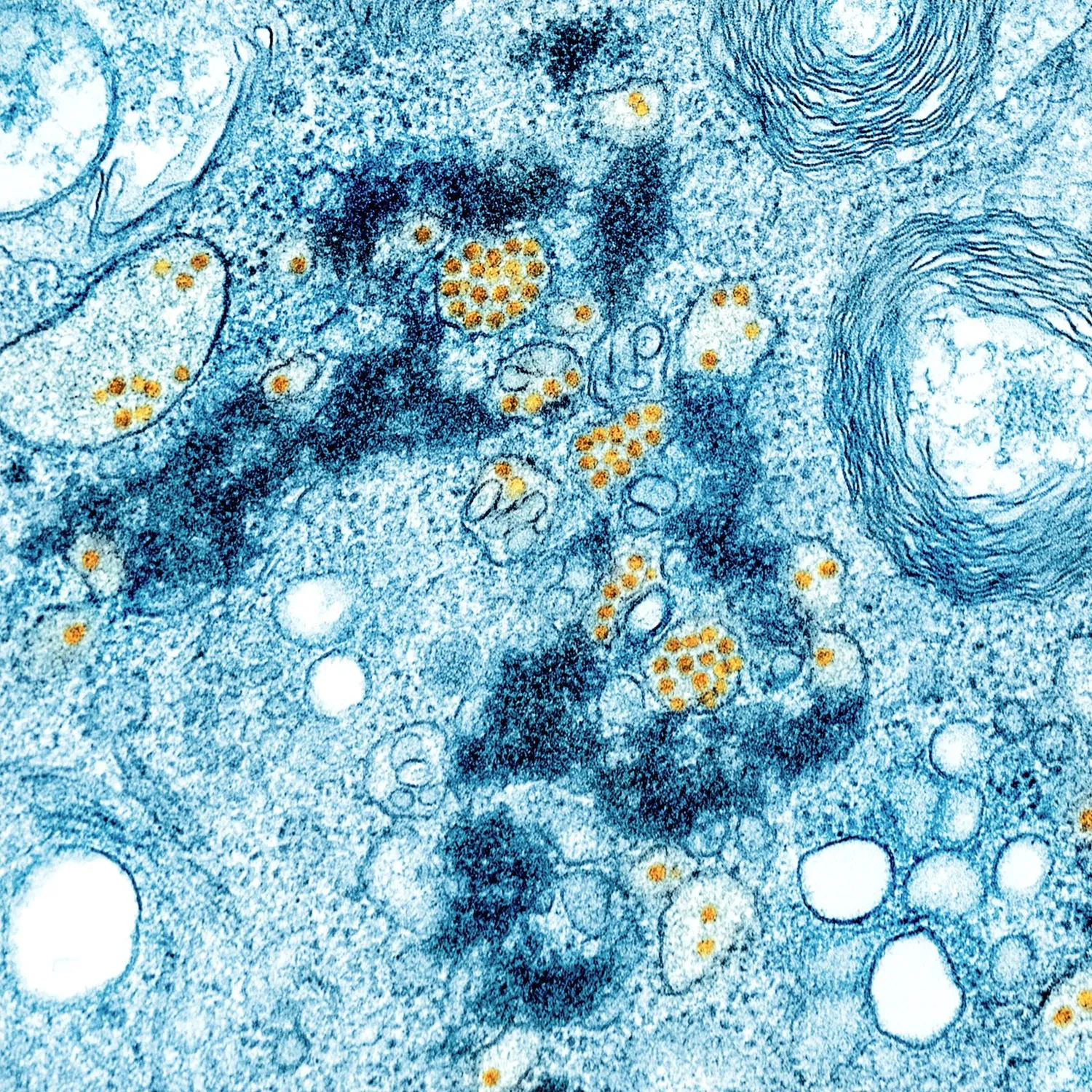
At CASP14, the community assessment of protein structure prediction, DeepMind’s AlphaFold 2 predicted the 3D shapes of many proteins with accuracy approaching experimental methods.
CASP has run for decades as a blind test. Organizers collect protein structures that have been determined experimentally but not yet released, and prediction teams try to compute those structures from the amino acid sequence alone. Because nobody knows the answers in advance, it is a fair measure of progress. For most of its history, progress was real but gradual. This year’s result was a clear jump.
The folding problem
A protein is a chain of amino acids. Once made, the chain folds into a specific three-dimensional shape, and that shape is determined by its sequence. In principle, knowing the sequence should tell you the structure. In practice, predicting how a chain will fold has been one of the hardest problems in biology, because the number of possible shapes is enormous.
Why it matters
A protein’s shape determines what it does. It determines which molecules it binds, how an enzyme works and where a drug might fit. Determining structures experimentally can take months or years. Methods such as X-ray crystallography and cryo-electron microscopy are powerful, but they are expensive, slow and do not work for every protein. A reliable prediction from sequence alone changes the pace of biology.
This doesn’t end experimental biology; it changes where we spend our time.
What it does not do
A predicted structure is still a prediction. Proteins are not static. They change shape, bind partners and are modified inside the cell, and a single static model does not capture all of that. Some proteins do not have a stable fold at all. It is also not yet clear how well these predictions will handle protein complexes or the effect of a single mutation. These are real limits, and they will need to be tested carefully by the community.
My perspective
This doesn’t end experimental biology; it changes where we spend our time. Instead of solving a structure, we can start from a good prediction and go straight to asking how the protein behaves in a living cell.
For my own work, the practical value is clear. When I study a protein involved in aging or cancer, one of the first questions is how it is built and which parts matter. A good structural model helps design better experiments: which region to mutate, which interaction to test, where a small molecule might bind. That saves time and makes the experiments that follow more pointed.
It also signals that biology and AI are going to be inseparable. Biologists who learn to work with these tools will ask bigger questions, faster. That does not mean every biologist needs to become a programmer. But we do need enough understanding to know what a model can and cannot tell us, and to judge when a prediction is reliable.
I expect the most important effects to show up slowly, in thousands of labs that suddenly have structural information they never had before. That is often how real change in science looks.